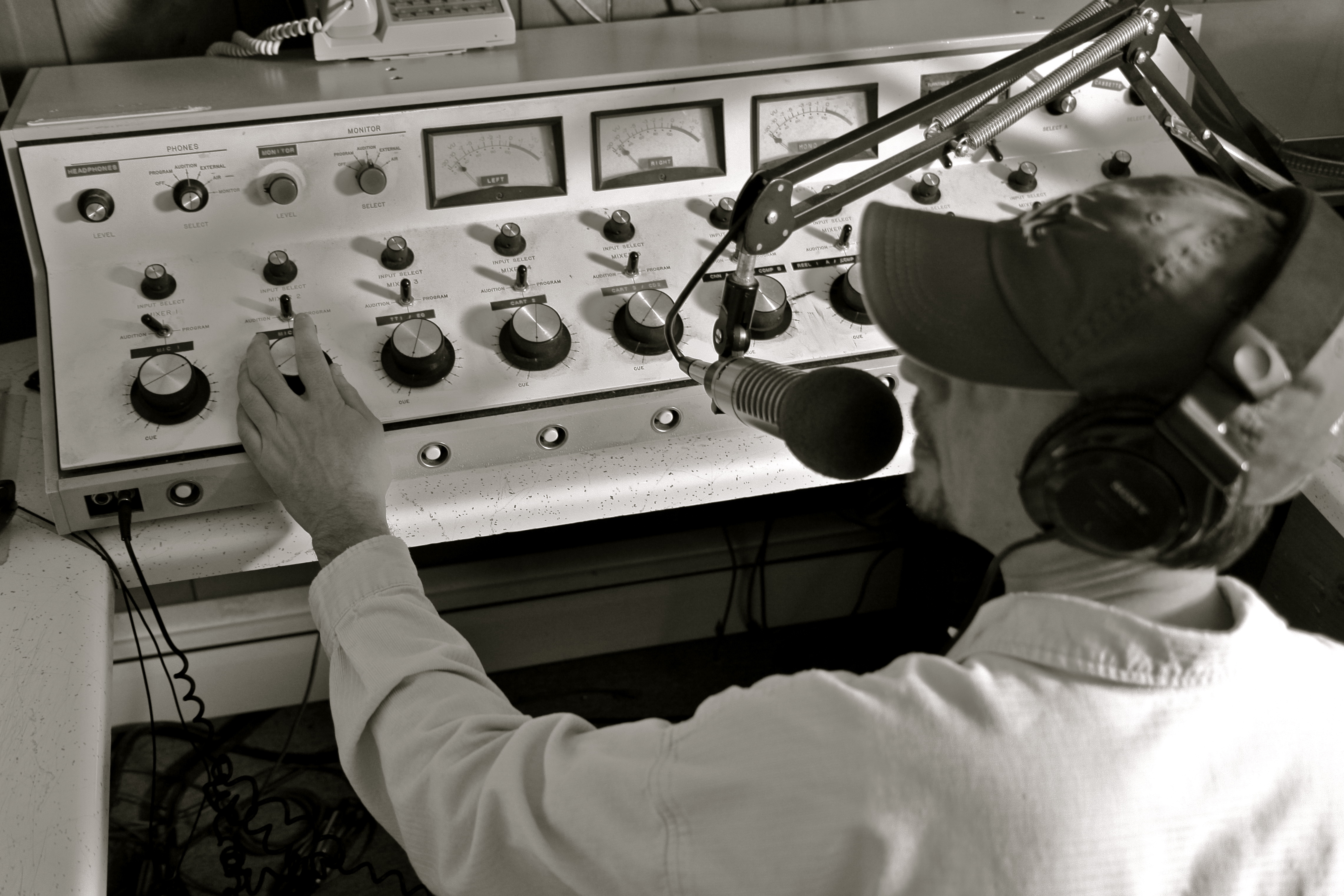
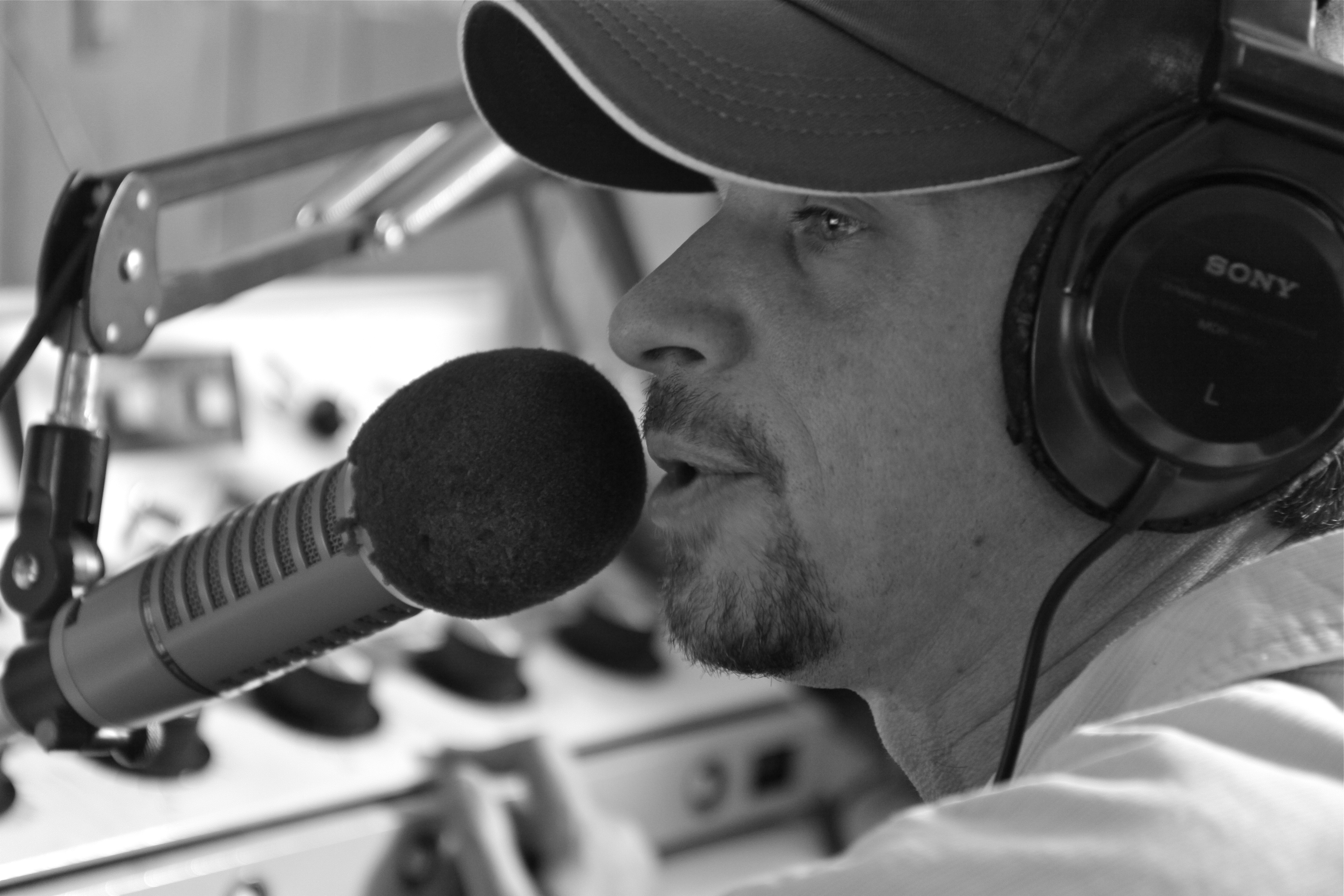
It starts at 10 years old in a bedroom and a basement in Afton, New York.
Not with a dream of being on the radio. With turntables. With records. With the obsessive, physical, tactile act of learning how sound works — how two records become one thing in the right hands, how a scratch isn't noise it's punctuation, how the right cut at the right moment changes the energy in a room before a single person in it consciously registers why.
By 12 he was getting paid for it. By 14 he was running dance floors in bars — yes, bars, yes underage, yes rural upstate New York — and then on into the clubs of Rochester, Syracuse, Binghamton, Oneonta. Just a kid from Chenango County earning his floor in rooms that didn't hand that to anyone. Many times the only white kid in a predominantly Black club — and in those rooms, in that era, respect wasn't assumed and it wasn't given. It was earned. Every set, every night, leaving it all on the floor. Working twice as hard to prove the ear was real, that the instinct was genuine, that the ability to read and respect a room had nothing to do with where you came from. The crowd was the verdict, and the verdict was at times brutal — but always honest, and always fair.
You read the room or you lost it. There was no algorithm to blame and no manager to cover for you. The crowd was the verdict — and the verdict was instant.
That's where the ear comes from. Not from a programming manual. Not from a broadcast school curriculum. From night after night crouched over turntables, every success and failure cataloged and refined in the moment, under performance lights, live without a net. From actual human beings in real time, voting with their feet, for years.
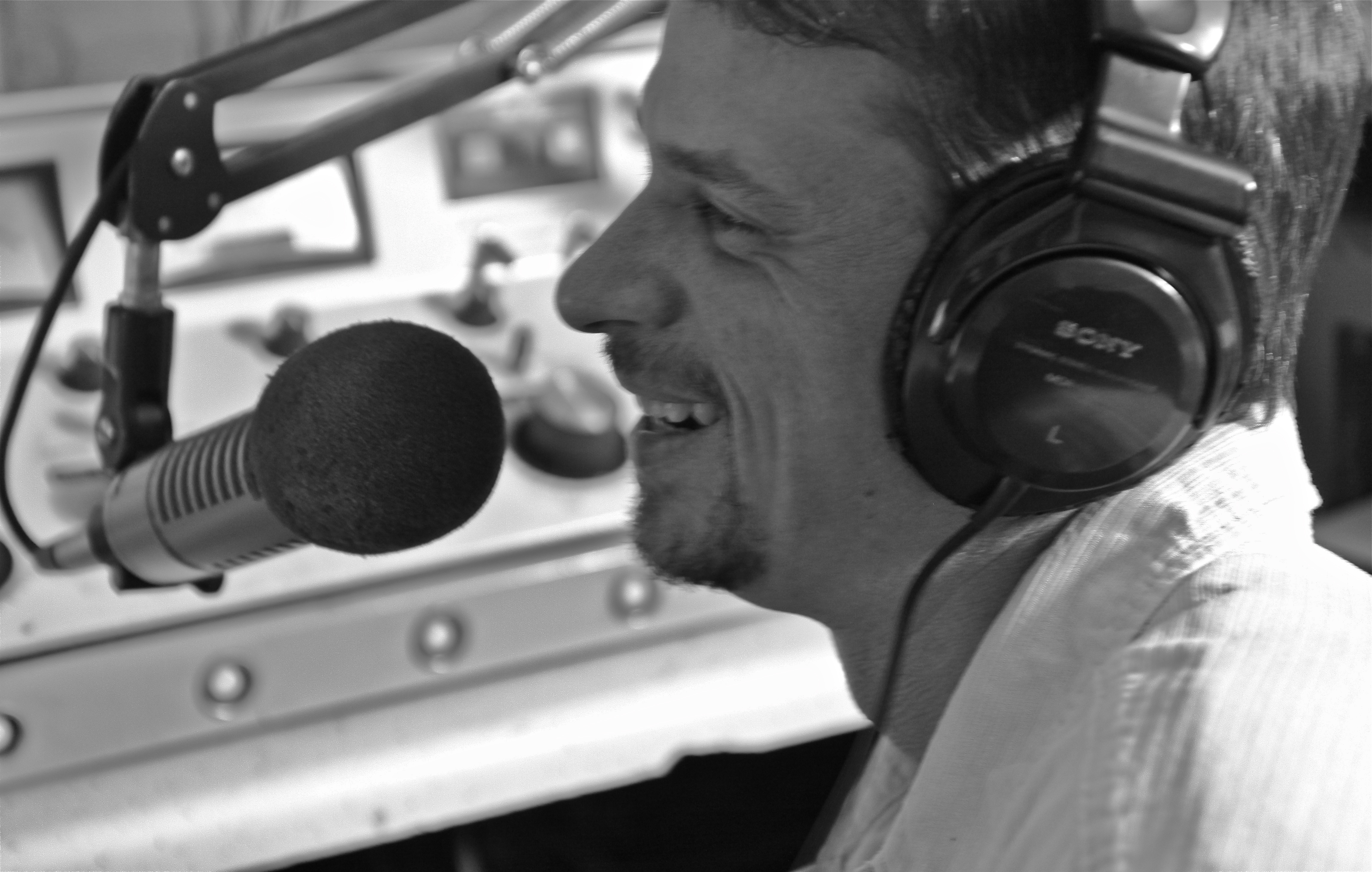
By the time Craig Stevens met Joe in the Bainbridge High School Library — after Craig spoke to students about radio careers — the future was already in motion. Joe had professional experience and an instinct that couldn't be taught because it had already been earned. Craig had the key to the next lock.
A professional partnership was formed in that library in 1992 when Craig agreed to bring Joe on as an intern. That partnership continues today, 34 years later — Craig as General Manager and Sales, Joe as Operations Manager and Program Director at WCDO.
Craig Stevens is a 2023 inductee into the New York State Broadcasters Association Hall of Fame.
In 1996 a deal was struck. Joe was ready to grow beyond what one market could teach him, and Craig knew it. The agreement was simple: go out, learn the business in other markets, come back in ten years with everything gained — and together they would make WCDO the best small market station in the country. Craig agreed. Joe left for Kentucky.
He landed at Commonwealth Broadcasting in Bowling Green as the first morning show host on the newly constructed 100.7 WKLX — arriving precisely at the inflection point when the industry was making the shift from live 24/7 operations to automation. Commonwealth was running on the Smartcaster platform, and Joe joined a five-person team that took Smartcaster from its original intent as a single-station solution and helped redesign it into a platform capable of supporting Commonwealth's footprint as the largest holder of broadcast signals in Kentucky at the time.
When Smartcaster eventually became too obsolete to maintain — proprietary cards, file formats, and parts that could no longer be sourced economically — Commonwealth moved to a modern automation system, and Joe pivoted again. Now the work was designing the new clocks and infrastructure the replacement system demanded: writing timecode clocks for programming and traffic, merging them into the operating logs the system would run in live operations, and bringing 40-plus radio stations onto the new platform. Each station required its own daypart and day-of-week configuration, every edge case resolved before going live. Detail-demanding, precision timecode work.
We took a great group of broadcasters and created a great group of programmers. The time has come to get back to broadcasting.
— Steve Newberry, President & CEO, Commonwealth BroadcastingThe education gained at Commonwealth was not anything broadcast school teaches. Smart broadcast engineering and studio design. Network and syndication operations through the construction and operation of the Big Red Radio Network for Western Kentucky University sports. Precision clock architecture. Seamless automation integration. And the community-first "morning mayor" mindset — local information first, programming built around what actually matters to the people in the coverage area.
Through all of it, the thread that ran constant was Commonwealth's operating ethos: do what is right for your community above all other considerations, and the programming decisions will be right. That belief became hard-wired.
The relationship between Craig Stevens and Joe Gardner ran unbroken through all of it. It survived geography, job titles, org charts, and the entire arc of an industry transforming around them. When Joe was gone, the phone still worked both ways. Engineering questions. Operations decisions. Format instincts. The conversation never stopped because it was never really about the job. It was about the station, and the station was about the community, and neither of those things has an off switch.
Ten years later — almost to the day — Joe called Craig. "It's time." Craig agreed. Joe returned to New York and to WCDO to finish what they had started together.
Make WCDO the best small market
radio station in the country.
Not the region. Not the state. The country.
That goal is not a tagline. It is a standard. It informs every decision, every format call, every rotation choice, every song that gets added and every song that doesn't. It is the question applied to everything: is this what the best small market station in the country would do?
WCDO runs a format that has no clean industry label — which is probably the first sign it's being done right.
The closest description is Classic Hits meeting Today's Best Music, roughly 50/50. The classic half is anchored hard to the 1980s — the decade that defines the station's core audience emotionally — with deliberate reach back through the 70s and a light touch on the 60s. The current half is curated: pop, rock, AAA, alternative — the music with melody, lyric, and staying power. Not what's charting because of streaming algorithm manipulation. What actually sounds like something when you hear it.
The 80s are the anchor because for the core audience, those records are not nostalgia — they are identity. You don't program around that. You program from it.
The current music exists alongside the classics because a station that only looks backward is a museum. The audience has teenagers. The audience still discovers music. The audience is not done. A genuine 50/50 honors both halves of the listener's life simultaneously.
What gets deliberately left out matters as much as what goes in. Not out of judgment — out of service. The listener tuned in for melody, for lyric, for the feeling of a song that sounds like it was made for them. The filter is not restrictive. It is respectful.
on air daily
only once per 6-day period
rotation cycle
(4,000+ total cataloged)
(oldies, Halloween, Christmas)
The competition runs their entire current rotation in under two hours. The same listener hears the same songs four or five times in a single morning commute. That is not radio. That is wallpaper.
WCDO is built the way a great DJ builds a crate — with intention, with range, with the understanding that surprise and familiarity are not opposites. The goal is to give someone something they've never heard and make them feel like they've always known it, while also delivering every record they love, identify with, and grew up with. That's the job. That has always been the job.